First Aid for bleeding

Ouch! You’re bleeding! What should you do?

Scenario:

You’re in the kitchen chopping vegetables for dinner. As you begin picking up speed, you suddenly feel a searing pain on your hand and notice a red spray of blood pouring onto the counter. You look at your hand and realize you’ve cut yourself deeply. It looks really bad.

What should you do?

Bleeding from an open wound is a common injury that most people experience at least once during their lifetime. Bleeding can range from minor to severe. It can be divided into three types:

Capillary bleeds = Usually a minor wound that doesn’t breech a large blood vessel. This type of wound slowly “oozes” blood. This wound pattern can include scrapes (abrasions) and small cuts.

Veinous bleeds = A wound breeches a vein and heavy bleeding can occur. In some cases this can be life-threatening.

Arterial bleeds = A high-pressure artery is cut, sending blood spurting out of the wound under significant pressure each time the heart beats. This is a life-threatening injury.

How do I help someone who is bleeding?

For major bleeding, send someone to call 9-1-1

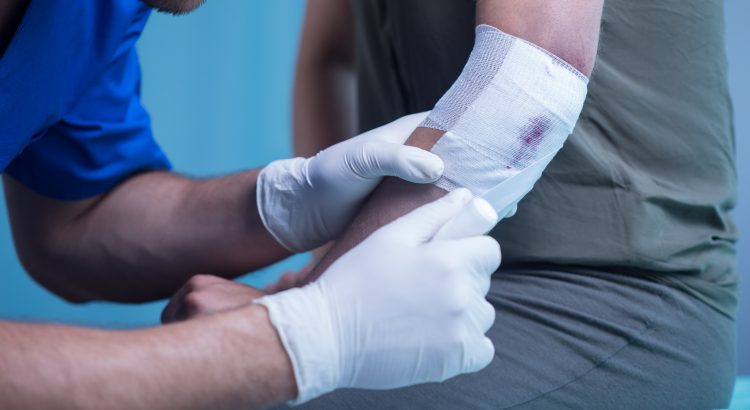
Take gauze from a first aid kit and apply hard, consistent pressure directly on top of the wound.

If you don’t have gauze, use any clean piece of cloth instead.

If blood soaks through the first piece of gauze, do not remove it. Taking off old gauze might tear out clots and cause bleeding to worsen. Instead, place additional pieces of gauze on top of the original.

Maintain firm pressure on top of the wound, until bleeding slows down. This may take several minutes.

Once bleeding stops or slows down, use a roller bandage to secure the gauze in place.

If the bleeding does not stop -> continue to maintain firm pressure on the wound, and consider the use of a tourniquet, if you are trained to use one.

After taking steps to stop bleeding, check your victim for signs of “shock” – a life-threatening condition that can be caused by significant blood loss.

What are the signs of shock?

Pale, ashen, cool, moist skin

Excessive thirst

Rapid breathing and/or pulse

Dizziness / weakness

Nausea / vomiting

Anxiety / disorientation

How do I help if someone has lost a lot of blood?

Call 911.

Help the patient lay down flat on the ground

Cover them with a blanket

Ensure external bleeding remains controlled.

To learn more about life threatening bleeding and shock, sign up for a First Aid CPR AED class today!
allergic reaction

Allergic Reaction! Act fast.

You and a friend decide to meet up for lunch at the new fusion restaurant that just opened up near work.

Things are going well. You’re having a great time catching up – and loving the food. Suddenly you notice your friend is looking flushed and rubbing her throat.

What’s wrong?” you ask.

My throat feels tingly,” she quickly responds, a look of panic spreading across her face as it starts to swell.

Are you okay?” you ask with some concern.

I’m…. having…. trouble…. breathing,” she manages to mumble as she begins gasping for air.

Uh oh. You think. Tingling throat, flushed skin, difficulty breathing…. She must be having an allergic reaction!


Allergic reactions are common in both adults and children. In some cases, allergic reactions are mild and may produce sneezing, itchy eyes and small rashes. But for others, allergic reactions are much more severe. These life-threatening reactions are called “anaphylaxis.”

What are some common allergens?

Nut products

Seafood

Insect bites and stings

Medications

Eggs

Dairy

Sesame seeds

What are some common symptoms of an allergic reaction?

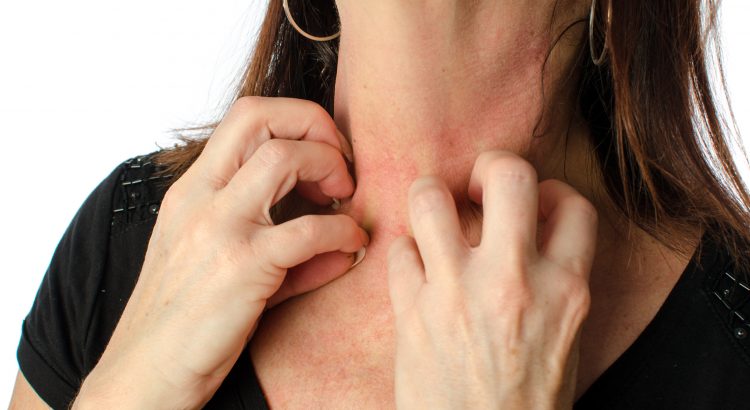
A rash or hives on the skin

Difficulty breathing

Dizziness or weakness

Passing out

Nausea and vomiting

Swelling of the face, tongue, lips and throat

Other signs and symptoms of anaphylaxis

How can I help someone having and allergic reaction?

The most effective treatment for anaphylaxis is the use of an Epinephrine Auto Injector. This is a prescribed device given to people with a history of severe allergic reactions. When used properly, an Epinephrine Auto Injector can help a person breath better and alleviate many of the other symptoms of anaphylaxis.

If someone is showing signs of a severe allergic reaction:

Send someone to call 911.

Ask the person where they keep their Epinephrine Pen and get it for them.

Have the patient administer the pen themself. If they can’t, follow the directions printed on the outside of the pen to administer the medication for them.

Here are the most common steps to use an Epinephrine Pen:

Pull out the safety cap.

Aim for the victim’s outer thigh, about halfway between the hip and the knee.

Press the needle-end of the Auto Injector firmly against the patient’s outer thigh, and hold it in place for approximately 3 seconds.

Pull the Pen out of the leg – and make sure not to touch the needle!

Monitor the patient’s condition. Stay with them until EMS arrives and takes over.

If you don’t have an Auto Injector available, try to find benadryl – an over the counter medication that can reverse many of the effects of an allergic reaction. Follow the directions on the box, and make sure to call 9-1-1.

To learn more about anaphylaxis and other emergencies take a CPR and First Aid class

Asthma Inhaler

Take a Breath! How to Help During an Asthma Attack

You’re jogging through Central Park when you come across a teenager hunched over with obvious difficulty breathing.

You stop and approach the teen:

What’s wrong? you ask.

I can’t… catch… my breath…, the boy whispers.

Between his gasps for air, you hear the patient mutter:

Asthm… asthma.

This teen is having a serious asthma attack. How can you help?


Asthma is a chronic medical condition in which certain substances and conditions (called triggers) cause inflammation and narrowing of the airways resulting in difficulty breathing. According to the American Red Cross, “common triggers include exercise, temperature extremes, allergies, air pollution, strong odors (such as perfume, cologne and scented cleaning products), respiratory infections, and stress or anxiety.”

What are the signs of an asthma attack?

Difficulty breathing

Wheezing or coughing

Being unable to speak in full sentences without pausing to take a breath

Chest tightness

Anxiety

A person with asthma usually knows when he is having an attack and carries special medication to treat these life-threatening events called a rescue inhaler.

How can I help someone having an Asthma Attack?

Call 9-1-1

Help the patient use his rescue inhaler:

Have the patient sit up and lean slightly forward.

Verify that the inhaler belongs to the patient and is designed for emergency situations.

Shake the inhaler and remove the mouthpiece.

Ask the patient to exhale completely, then place the inhaler in his mouth.

Tell the patient to breath in deeply while spraying the medication simultaneously.

Instruct the patient to hold the medication in his lungs for 10 seconds.

If at any point, the patient becomes unresponsive, move them to the ground and check to see if they need CPR (the 9-1-1 operator can help you with this).

Learn more about asthma, register for a First Aid CPR AED class.

What’s the number for Poison Control – and why should you care?

There are thousands of things on earth that are poisonous to humans. Some are found in nature such as poisonous berries, snake venom and spider bites. Others are manmade, like carbon monoxide and chemical cleaning agents.

Think it will never happen to you? Think again.

Last year, there were 2.2 million incidents of human poisoning, according to the National Poison Control Center. 8% of those resulted in serious illness or death. Pediatric patients (children and babies) experienced unintentional poisoning at a much higher rate than adults.

Knowing how to take action could save your life or the life of a loved one.

What can you do if you think someone has been poisoned?

  • If the patient is showing signs of a life-threatening emergency such as unresponsiveness, confusion, difficulty breathing or seizures:
    • Call 9-1-1 immediately
    • If necessary, begin CPR (if victim is unresponsive and not breathing)
    • Call Poison Control at 1-800-222-1222 for information on how to treat the poisoning while waiting for the ambulance.
  • If the patient is not experiencing a life-threatening symptom:
    • Call Poison Control at 1-800-222-1222 for advice on treatment.

The Poison Control hotline features live help from experts 24 hours a day, 7 days a week.

Put the number into your cell phone! 1-800-222-1222

To learn more First Aid and CPR skills, sign up for a class today!

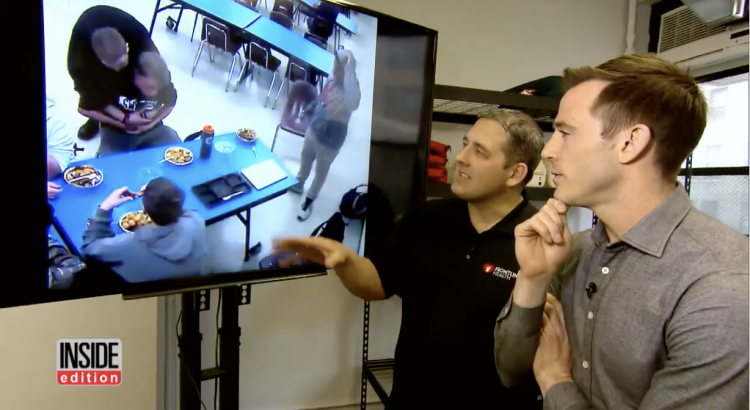
Shane Woodall, of Frontline Health CPR Training in NY on Inside Edition

Frontline Health Featured on National TV – Again!

As a training center with over two decades of experience training thousands of students in CPR and First Aid, Frontline Health is often asked by local and national news outlets to discuss life-saving techniques.

This past Friday, Shane Woodall, President of Frontline Health and himself an experienced instructor, appeared on Inside Edition to discuss the Heimlich maneuver and comment on a recent incident in which a Wisconsin student was saved from choking on a cheeseball.

Find out for yourself why Frontline Health has thousands of satisfied customers:

  • Expert American Heart Association and American Red Cross instructors with decades of real life medical experience as EMTs, Paramedics and Nurses.
  • Convenient midtown training facility featuring state-of-the-art equipment
  • Same-Day Certification
  • On-site courses available – we’ll come to you.

Empower yourself with real knowledge on how to respond to an emergency – Enroll in a First Aid CPR AED class.