First Aid for bleeding

Ouch! You’re bleeding! What should you do?

Scenario:

You’re in the kitchen chopping vegetables for dinner. As you begin picking up speed, you suddenly feel a searing pain on your hand and notice a red spray of blood pouring onto the counter. You look at your hand and realize you’ve cut yourself deeply. It looks really bad.

What should you do?

Bleeding from an open wound is a common injury that most people experience at least once during their lifetime. Bleeding can range from minor to severe. It can be divided into three types:

Capillary bleeds = Usually a minor wound that doesn’t breech a large blood vessel. This type of wound slowly “oozes” blood. This wound pattern can include scrapes (abrasions) and small cuts.

Veinous bleeds = A wound breeches a vein and heavy bleeding can occur. In some cases this can be life-threatening.

Arterial bleeds = A high-pressure artery is cut, sending blood spurting out of the wound under significant pressure each time the heart beats. This is a life-threatening injury.

How do I help someone who is bleeding?

For major bleeding, send someone to call 9-1-1

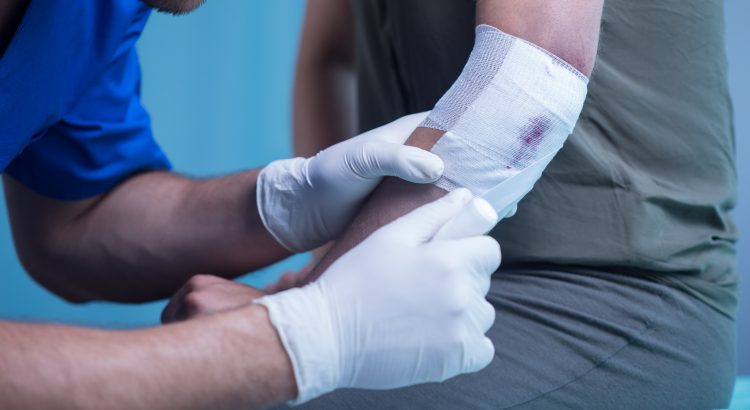
Take gauze from a first aid kit and apply hard, consistent pressure directly on top of the wound.

If you don’t have gauze, use any clean piece of cloth instead.

If blood soaks through the first piece of gauze, do not remove it. Taking off old gauze might tear out clots and cause bleeding to worsen. Instead, place additional pieces of gauze on top of the original.

Maintain firm pressure on top of the wound, until bleeding slows down. This may take several minutes.

Once bleeding stops or slows down, use a roller bandage to secure the gauze in place.

If the bleeding does not stop -> continue to maintain firm pressure on the wound, and consider the use of a tourniquet, if you are trained to use one.

After taking steps to stop bleeding, check your victim for signs of “shock” – a life-threatening condition that can be caused by significant blood loss.

What are the signs of shock?

Pale, ashen, cool, moist skin

Excessive thirst

Rapid breathing and/or pulse

Dizziness / weakness

Nausea / vomiting

Anxiety / disorientation

How do I help if someone has lost a lot of blood?

Call 911.

Help the patient lay down flat on the ground

Cover them with a blanket

Ensure external bleeding remains controlled.

To learn more about life threatening bleeding and shock, sign up for a First Aid CPR AED class today!
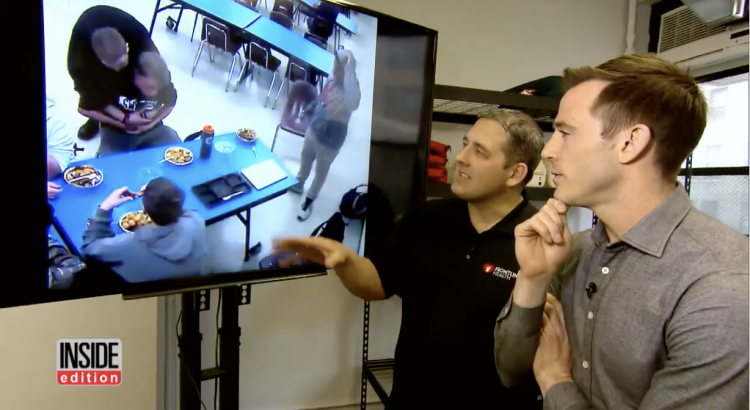
Shane Woodall, of Frontline Health CPR Training in NY on Inside Edition

Frontline Health Featured on National TV – Again!

As a training center with over two decades of experience training thousands of students in CPR and First Aid, Frontline Health is often asked by local and national news outlets to discuss life-saving techniques.

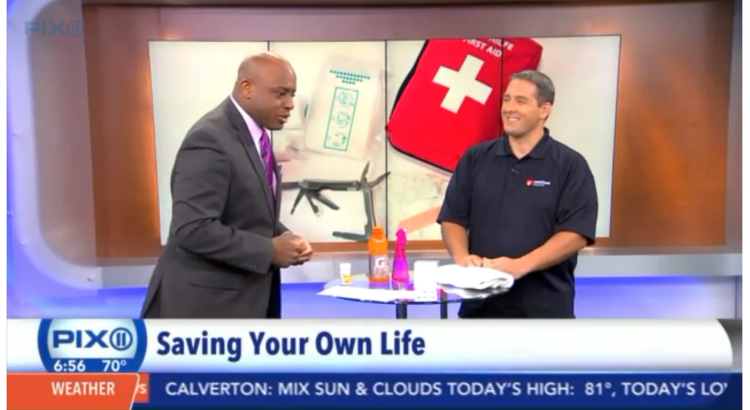
This past Friday, Shane Woodall, President of Frontline Health and himself an experienced instructor, appeared on Inside Edition to discuss the Heimlich maneuver and comment on a recent incident in which a Wisconsin student was saved from choking on a cheeseball.

Find out for yourself why Frontline Health has thousands of satisfied customers:

  • Expert American Heart Association and American Red Cross instructors with decades of real life medical experience as EMTs, Paramedics and Nurses.
  • Convenient midtown training facility featuring state-of-the-art equipment
  • Same-Day Certification
  • On-site courses available – we’ll come to you.

Empower yourself with real knowledge on how to respond to an emergency – Enroll in a First Aid CPR AED class.

Why do I need to learn CPR… can’t I just call an ambulance?

The most famous phone number in the United States – – 911

Ever since you were a kid, you knew that if you ever needed emergency help, calling 911 was the right move to reach the fire department, police or ambulances.

If you see someone suddenly collapse onto the ground and become unresponsive, should you call 911? … Of Course

But how long will it take for the ambulance to arrive?

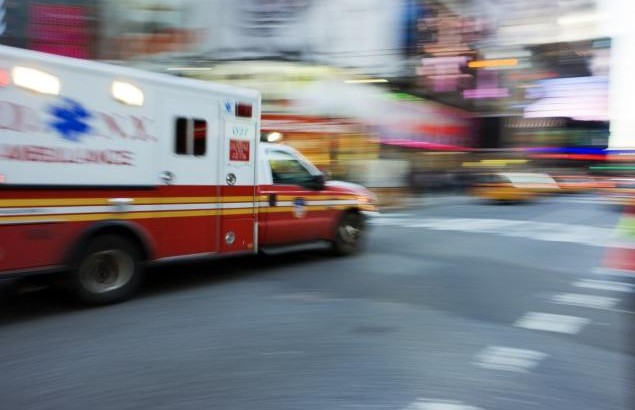
Although EMTs and Paramedics try to reach victims quickly using lights and sirens, it can often take a long time for the ambulance to arrive. In New York City, the average ambulance response time to a life threatening emergency is over 8 minutes.  

8 minutes! That’s a long time when your friend or family member is not breathing or choking.

When someone goes into cardiac arrest – a condition where the heart suddenly stops beating – they become unresponsive and stop breathing normally. Each passing minute without care results in a 7-10% plunge in survival, according to the American Heart Association.

That’s 10% per minute.

If it takes 8 minutes for an ambulance to show up and no one has helped the patient in the meantime, that victim will probably not survive.

Early CPR from bystanders can triple a person’s chance at survival and keep that person alive until the ambulance arrives and takes over.

Empower yourself with real knowledge on how to respond to an emergency by taking a CPR AED class.

Why You Should Make Your Own First Aid Kit

Accidents happen. People get sick. It’s a part of life.

Although we can take steps to reduce injury and illness, the fact remains that an emergency will happen from time-to-time and being prepared for it can help produce the best possible outcome for a victim.

Having a well-stocked First Aid kit is an important part of protecting yourself and your family.

Many workplaces and homes have these kits. They typically buy them pre-stocked with a wide variety of items that “someone else” has decided is valuable in an emergency.  A quick search on Amazon for “first aid kit” yielded 58,709 results!

There are 2 problems with this approach:

  • You’re trusting some faceless company to properly stock your First Aid Kit without considering your individual needs or level of training. These companies are often focused more on their bottom line than ensuring you have what you need. For example, many pre-made kits come with random ointments, but don’t include tourniquets – considered by trauma physicians to be an essential lifesaving tool to stop bleeding.
  • If you allow someone else to assemble your kit, you won’t know what you have available or where things are kept.

A much better approach is to buy a first aid kit completely empty and buy items to fill it up based on your level of training and comfort. Take a First Aid course. During your class, make note of those items you would need to treat the different injuries and illnesses you learn about. Ask your instructor for recommendations.  And above all… make sure you and everyone else at work/home knows where the First Aid kit is – and what’s inside it.

Tips for Home Preparedness

All relevant information should be posted by the telephone, including:

The emergency response number (for example, do you need to dial an outside extension to reach 911?)

Your address

Poison control number 1-800-222-1222

Written directions to the nearest Automated External Defibrillator (AED)

Ensure your house or apartment number is large, well-lit and clearly visible.

First Aid Kit Suggestions:

  • Pocket Mask for CPR (collapsable w/ one way valve): To give breaths during CPR
  • Large nitrile (non-latex) gloves (2 pair): To protect rescuers from bodily fluids
  • Shears (1): To remove clothing or cut bandages
  • Bandaids (1 box of regular; 1 box of X-large): For minor scrapes
  • 4×4 gauze pads (5-10): Used to stop minor bleeding
  • 5X9 gauze pads (1-2): Used to stop major bleeding
  • Combat Application Tourniquet – C.A.T. (1): To stop life-threatening bleeding in an arm or leg
  • 3″ roller gauze (1): To wrap and secure gauze pads in place
  • 2″ roller gauze (1): To wrap and secure gauze pads in place
  • 1″ tape (1):  To secure roller gauze in place
  • Anti-septic cream (1 box of individual packets): For use on minor scrapes to prevent infection
  • Cotton-tip applicators (1 small bag): To apply anti-septic cream
  • Waterjel Burn Pads (1-2):  For pain relief of minor burns after 10 minutes of cold water rinsing
  • Sterile water 250ml (1 bottle): To clean minor wounds, or wash an amputated part
  • Tweezers (1): To remove ticks and splinters
  • Small packaged alcohol wipes: To clean tweezers or dirty skin
  • Gallon-size ziplock bags (1-2):  To hold ice used for cold compress, or to protect an amputated part
  • Instant Cold Pack (1-2): To relieve pain and swelling
  • Insta-Glucose (1): Oral sugar to give to diabetics experiencing low blood sugar
  • Baby Aspirin (81mg tablets): To assist heart attack victims
  • Benadryl: To treat allergic reactions

The outline above is not a substitute for formal  instruction. Please contact our team for more information on taking a First Aid CPR AED certification class.