Learning What an AED Device Is

Learning What an AED Device Is

Life-saving technology is critical, but you need to understand its purpose and functionality. When learning what an AED device is, there are plenty of important facets to discern. Here is a quick overview of the basics.

What Is an AED?

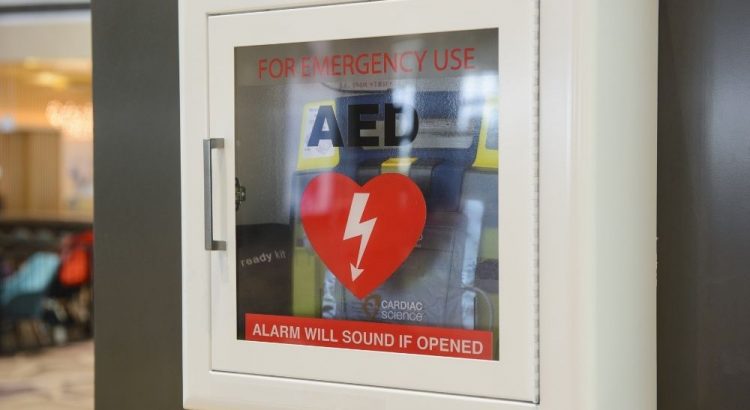
You have probably seen the sign showing a big red heart with a white lightning bolt down the center. This is the signage marking the presence of an AED, or automatic external defibrillator. Often a safety standard in buildings, an AED is the device used when a person is suffering from sudden cardiac arrest. Cardiac Arrest can come at any time and happen often enough that ordinary citizens should know how to use these devices.

What Can It Be Used For?

An automatic external defibrillator is used for the emergency treatment of cardiac arrest. Once applied correctly, the device analyzes the heart rhythm and can send an electric shock to the heart. This helps to eliminate the malfunctioning rhythm and encourages the heart to resume a normal rhythm. AEDs come with voice-guided instructions since many people have not practiced with them before an emergency happens.

How Can I Learn How To Use It?

The AED is a complex device, but the instructions are simple and easy to understand. Though you can quickly follow along in a time of crisis, it is best to learn beforehand. Consider watching videos online if you need a cursory explanation. If you want to be more equipped or your employer requires formal training, research local classes near you that provide AED certification.

Learning what an AED device is and how to use it can be difficult at first but understanding how to navigate and operate life-saving technology is an important skill. If you or your employer are looking to purchase an automatic external defibrillator, check out our AED devices for sale here at Frontline Health.
How To Get Your BLS Certification

How To Get Your BLS Certification

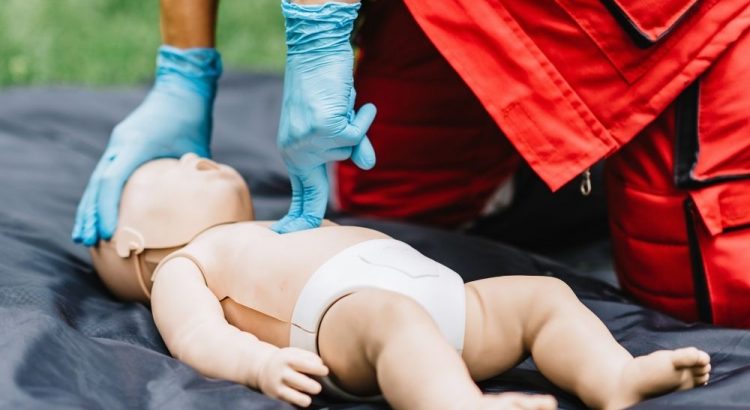
Basic life support, or BLS, is a certification obtained by taking a course in life-saving techniques. No matter what medical profession you are in—nurse, nursing student, paramedic, dentist, EMT—there are many reasons your employer may want you to become certified in basic life support. Here are the basic steps for how to get your BLS certification.

Find a Class

The first step in obtaining your BLS certification is finding a class that works with your schedule and budget. Find out what your employer or profession requires—some medical professionals need to obtain a specific type of BLS training and update it every two years. Look through the courses offered by the American Heart Association to figure out which type is best for you. If you are not in the medical profession, you may be able to take a CPR class instead of a BLS class. Figure out the exact type of certification needed and find the course that fits that description.

Register and Attend

Now that you have found the kind of course you need, look to register with the organization you have chosen. There are many options available, so find what works best for you. Some classes may require you to fill out preliminary paperwork or bring some materials to class. Be sure to look over this information before attending the first session so you are prepared and able to complete your BLS training on time.

Receive Your Certificate

After you have completed the training and passed any comprehension tests, you are eligible to receive your certificate. If you are in a hurry and need your certificate printed quickly, contact your teacher or course provider to fast track the process. Once you have secured your certificate electronically or physically, send it over to your employer for approval. If you have any difficulty in the process, contact your supervisor directly to ensure that you have completed everything needed.

Now that you know how to get your BLS certification, consider taking your BLS class with us here at Frontline Health. We offer American Heart Association BLS provider certification in NYC and health courses and certifications for all kinds of professionals. The knowledge learned in these sessions will equip you to quickly and calmly help others in many emergency situations.

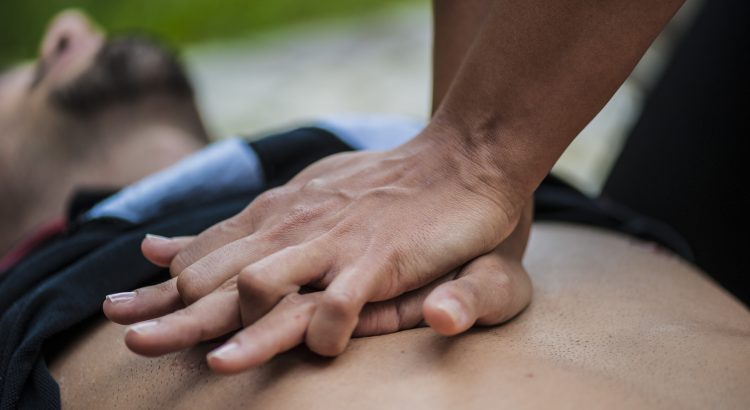
CPR hand placement

COVID-19 and CPR, What we are doing to protect you.

UPDATE: As of April 8th at 8:00PM We ARE OPEN for all regularly scheduled BLS Provider CPR AED courses for Healthcare Providers and all Medical Professionals, Pharmacists, Hospital Staff, and Hospital Support Staff.

Register for a BLS Provider CPR course or a BLS Provider Renewal Course.

UPDATE: Beginning May 1 at 10:00am We will reopen for layperson CPR and CPR First Aid classes for all essential workers and anyone who needs to complete a CPR certification course as part of their job requirements.

Register for a CPR AED course or a combo First Aid CPR AED course.

At Frontline Health CPR Training, the safety of our students and instructors is our utmost concern. We are taking precautions to minimize the risk of COVID-19 transmission during CPR classes to make sure you have a safe training environment. We train according to, and use equipment that meets the standards of the American Red Cross and American Heart Association. All classes are now limited to at most 12 participants.

Whenever possible we use single use disposable equipment. Some equipment such as CPR manikins and AED training devices are used repeatedly. All equipment is thoroughly sanitized after every single use according to the manufacturers recommendations and CDC guidelines for infection control.

Each student in our training center will have their own sanitized CPR Manikin, CPR Pocket mask, and single use one way valve. Our students will not have to share equipment with other students.

You will NOT be asked to put your mouth directly on a Manikin.

Classroom surfaces, door knobs, and other touch points are cleaned after every training session.

All participants and instructors are encouraged to practice good hygiene, including hand washing with soap and water for at least 20 seconds before and after the course, and before and after snack or meal breaks.

We encourage social distancing. Students are asked to spread out and keep 6 feet of space between each other at all times.

We encourage students to wear a mask or face covering during the class.

We encourage students to stay home when you are sick and avoid close contact with people who are sick.

If a scheduled student has identified symptoms (fever, cough, shortness of breath), they are advised to not attend a training class. You will be able to postpone your class for any reason and will NOT have to pay to reschedule.

We encourage you to avoid touching your eyes, nose, and mouth.

We encourage you to cover a cough or sneeze with a tissue, then throw the tissue in the trash. 

Our classrooms are stocked with alcohol-based hand sanitizer and cleaning wipes for your use during CPR class.

If you have any questions or concerns please call or text 212-983-5389 or email us at shane@frontlinehealth.com

For more info on COVID-19 please refer to the CDC recommendations

According to the American Heart Association, Cardiac arrest kills more than 350,000 people a year in the Unites States alone. We encourage everyone to be trained in CPR and how to use and AED device. Learn to save a life! Take a CPR certification class today.

Beat the Heat! How to Help Someone Suffering from a Heat Emergency

It’s a sweltering hot summer day.  You’re walking on the white-hot sidewalk, sweat pouring down your face, when you suddenly notice a jogger hunched over on the ground.  You approach her and notice that she’s drenched in sweat — her eyes are half-closed and she’s mumbling incoherently.  This is a serious medical emergency.


Heat emergencies occur when a person’s body overheats from hot temperatures and dehydration.  It is critical to identify early signs of a heat emergency because without early treatment, symptoms can worsen and become life-threatening.  Your quick actions could save a life.

There are 3 types of heat emergencies in order from least-to-most severe:  

Heat Cramps

Heat Exhaustion

Heat Stroke

1) Heat CrampsAn early sign that the body is having trouble with heat.

  • Signs:  painful muscular spasms, usually in the legs or abdomen; often heavy sweating; the patient is awake and in a lot of pain.
  • Treatment:
    • Move the person to a shady or cool spot.
    • If the person is awake and able to swallow, give him slow sips of a drink containing electrolytes and carbohydrates (a commercial sports drink, coconut water or milk), or regular water.
    • Gently stretch the muscle and massage the area to relieve the cramps.
    • If the person becomes confused or unconscious, call 9-1-1.

2) Heat Exhaustion – More serious and can become deadly if left untreated.

  • Signs:  cool, moist skin; headache; dizziness; weakness; nausea.
  • Treatment:
    • Move the person to a shady or cool spot.
    • Remove excess clothing.
    • Spray the person with cool water or apply cool wet cloths, and fan him.
    • If the person is awake and able to swallow, give him slow sips of a drink containing electrolytes and carbohydrates (a commercial sports drink, coconut water or milk), or regular water. Don’t let the person drink too quickly.
    • If the person becomes confused or unconscious, call 9-1-1.

3) Heat Stroke – A life threatening emergency.

  • Signschanged mental status (i.e. confusion, unresponsiveness, seizures); hot skin; vomiting; rapid breathing; difficulty seeing.
  • Treatment:
    • Call or have someone else call  9-1-1.
    • Move the patient to a cool area, if possible.
    • Rapidly cool the body using ice or cold water. Consider submerging the patient in a cool bath, or place ice cold compresses on the neck, armpits and groin. Do not pour water onto the head or face.
    • Continue rapidly cooling the person for 20 minutes or until the person can respond to questions.
    • Do not give the person anything to drink if they are not awake or cannot swallow.
    • If the person starts vomiting, roll them on their side to prevent them from choking.
    • If necessary, begin CPR.

Learn to Save a Life! Take a First Aid CPR AED Course Today!

How to save a choking infant

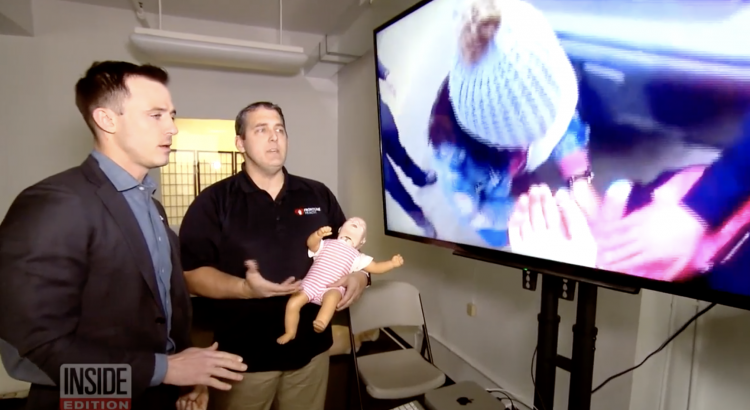
Frontline Health’s Shane Woodall on National TV: How to Save a Choking Baby

Frontline Health President Shane Woodall recently appeared on Inside Edition to discuss the lifesaving efforts of two police officers who heroically saved a baby from choking to death.

Shane commended the officers on a job well done and reviewed the proper steps for relieving choking in an infant victim.

Here’s the video!


Our instructors regularly appear on national television and are experts in the field of CPR, First Aid and Emergency Medical Services.

Come learn from the best! Take a First Aid CPR AED Course Today!