First Aid for an Embedded Object

Don’t Remove an Impaled Object!

You’re sitting at your desk at work when you suddenly hear a loud crash and the sound of breaking glass. You run out to the hallway and find an injured coworker lying on the floor, a large piece of glass stuck in her leg. She tells you that a large glass vase shattered and pierced her calf.

How to care for a person with an Impaled Object? 

An penetrating injury occurs when an object enters the body, causing a wound. Sometimes the object will remain stuck in the body. For example, a large piece of glass, wood or metal might be seen sticking out of the wound.

Here’s the #1 rule:  Do not remove the impaled object..

Pulling out the object can damage nerves and blood vessels and make the wound much worse.

Instead, you should:

Call 911 and get your first aid kit.

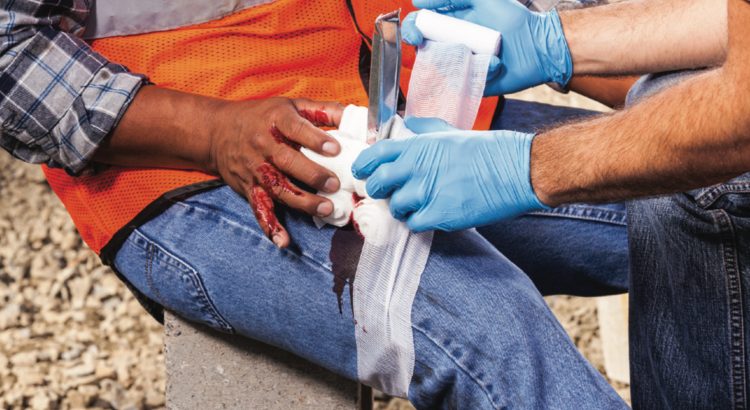
Apply plenty of gauze or pieces of clean cloth around the embedded object to begin to control blood loss.

Place additional bulky dressings around the embedded object to stabilize it in place and prevent it from moving around.

Monitor the patient for signs of shock and treat accordingly.

If the object falls out on its own, apply direct, firm pressure to the wound.


Learn to Save a Life! Take a First Aid CPR AED certification course Today!

Hypothermia

Brrr! How to recognize and treat hypothermia!

Living in New York means enduring harsh winters, including snow, freezing wind and icy sidewalks. To protect yourself from serious injury, it’s important to recognize the signs and symptoms of HYPOTHERMIA.

Protect yourself – what you need to know!

What is Hypothermia?

Hypothermia is a potentially life-threatening condition that occurs when the body loses too much heat. It can be fatal.

Who’s at Risk for Hypothermia?

Everyone can experience hypothermia with prolonged exposure to cold weather.

Even if the weather is NOT cold, a person can STILL get hypothermia if they are wet, wearing wet clothing or exposed to wind.

Children, the Elderly and People with Poor Circulation are especially at risk.

What are the Symptoms of Hypothermia?

A patient experiencing hypothermia may:

become drowsy; indifferent; disoriented or confused.

develop a “glassy stare.”

start shivering, but shivering may stop as the body temperature decreases… if a patient stops shivering, this may be a sign that she needs immediate medical care.

The person may stop responding or need CPR (a 911 operator can tell you how to give CPR).

How do you care for Hypothermia?

Do:

Call 9-1-1

Move the person to a warmer place.

Remove wet clothing and dry the person (remember that wet skin worsens hypothermia!)

Help the person warm up gradually by helping him put on dry clothing (including a hat, gloves and socks) and wrapping him in a blanket.

Don’t:

Don’t pour hot water on him or throw him into a hot bath or shower. (This can be dangerous! – rapidly re-warming a hypothermia victim can cause dangerous heart rhythms! Remember to warm the patient gradually).

Don’t give alcohol or coffee. (Instead, try small sips of a warm beverage like broth or water).

Empower yourself with real knowledge on how to respond to hypothermia and other emergencies – Take a First Aid CPR certification class Today!

Concussion

Healing Head Trauma: How to Spot a Concussion

concussion is a common type of brain injury that involves temporary loss of brain function. Concussions can occur from any injury to the head. The injury may be minor (a small bump) or something more significant like a baseball strike to the head. Many people who experience a concussion do not lose consciousness, or lose consciousness only briefly.

What are the signs of a concussion?

Memory loss or difficulty thinking clearly

Mental fog

Headache

Blurry vision

Nausea or vomiting

Sensitivity to light

Problems with balance

Mood swings

Changes in sleeping or eating habits

How do I help someone with a concussion?

If someone is hit in the head and suddenly loses consciousness, call 911.

Otherwise, advise the person to stop the activity he was engaged in when the incident occurred and encourage him to see a healthcare provider to evaluate the severity of the injury and to determine whether additional testing is needed.

When in doubt, call 911

Do I need to keep the person awake?

The American Red Cross says that “it is generally safe for a person with a concussion to go to sleep. However, the person’s healthcare provider may recommend that you wake the person periodically to make sure that his condition has not worsened.”


Learn to Save a Life! Take a First Aid CPR AED certification course Today!

Tourniquet

Severe Bleeding: How to Use a Tourniquet

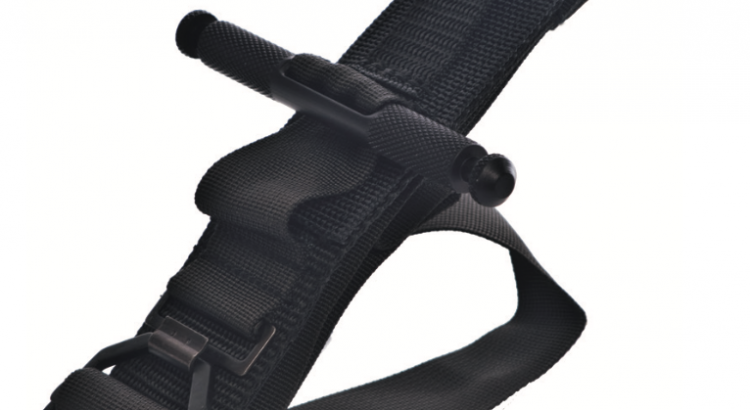
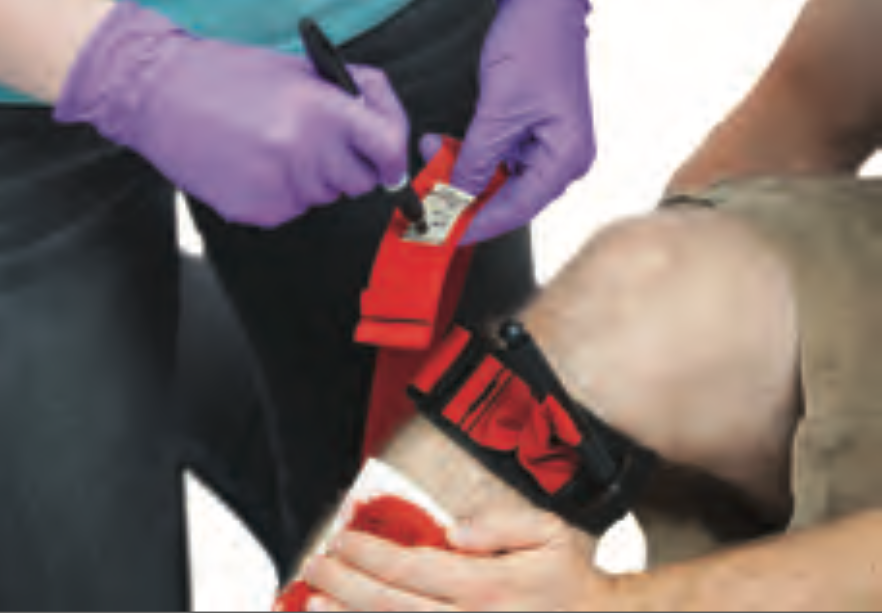
While most bleeding can be treated with direct firm pressure using gauze or cloth, sometimes severe bleeding can only be stopped by using a tourniquet. A tourniquet is a device placed around an arm or leg to constrict blood vessels and stop blood flow to a wound.

Strap

During recent terror attacks in Boston, Orlando and Las Vegas, the early application of tourniquets saved the lives of dozens of trauma victims who were experiencing severe bleeding from their arms and legs.

When should I use a Tourniquet?

– Severe, life-threatening bleeding to the arms or legs that cannot be controlled with direct pressure.

– A wound in a physical location that makes it impossible to apply direct pressure (e.g., a person with a leg trapped under a rock).

– Gunshot injuries or bomb blast wounds in an unsafe scene.

How do I use a Tourniquet?

– Send someone to call 9-1-1 and have someone apply pressure to the wound using a clean gauze or cloth.

– A commercially made CAT tourniquet is preferred. These are quick and easy to use. Familiarize yourself with the tourniquet in your home or workplace First Aid kit.

Most tourniquets are applied the same way:

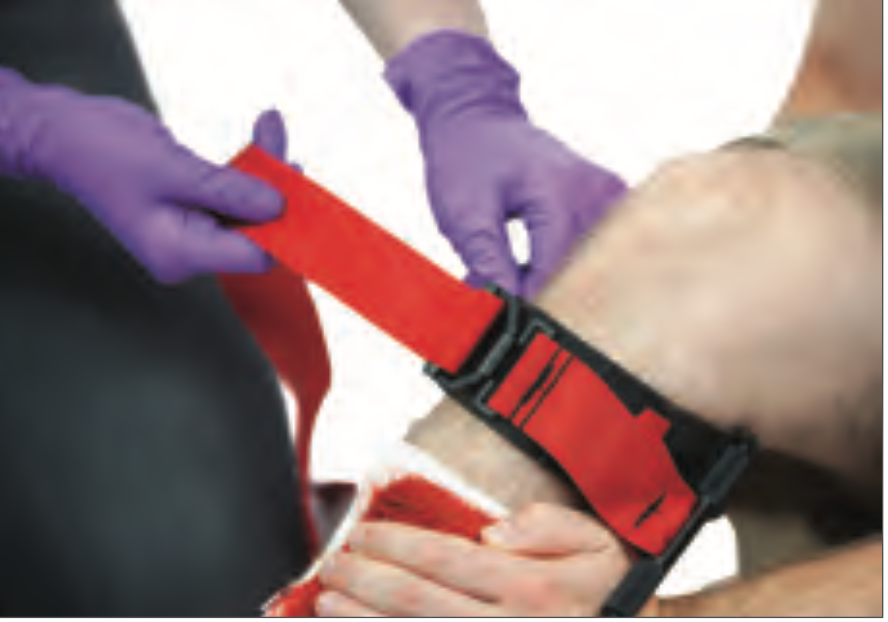
Applying Tourniquet

Place the tourniquet around the wounded limb about 2 inches above the wound. Avoid placing it over a joint.

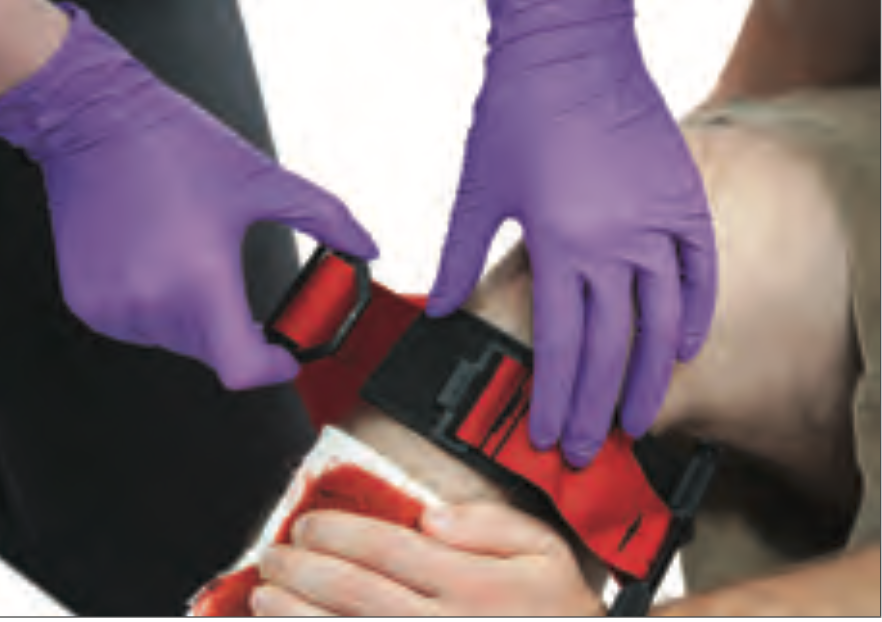
Applying Tourniquet

Secure the tourniquet tightly in place.

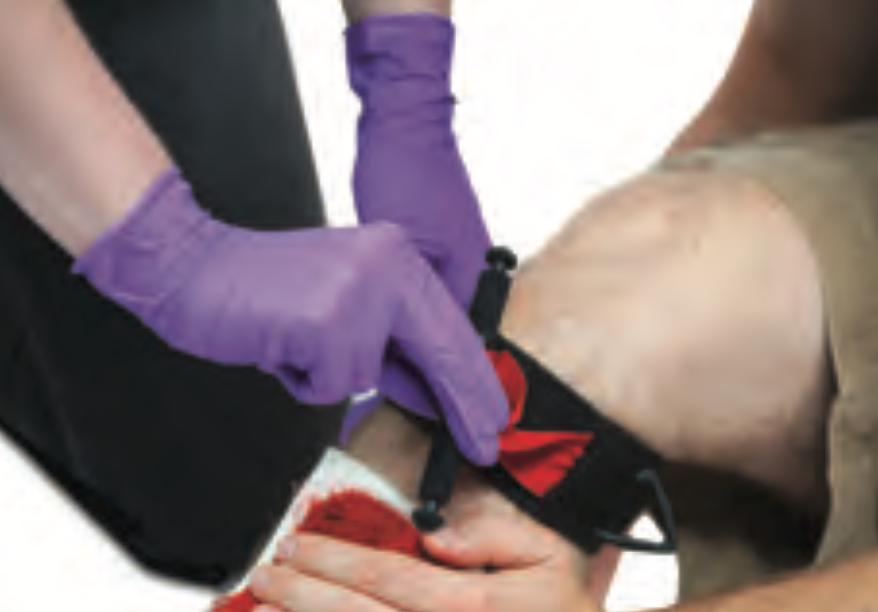
Applying Tourniquet

Twist the rod (windlass) to tighten the tourniquet until bright red bleeding stops flowing from the wound, and secure the rod in place using  the clip or holder.

Applying Tourniquet

Note the time you applied the tourniquet and give this information to EMS personnel when they arrive.

Do not remove the tourniquet.

If you don’t have a commercially manufactured tourniquet, you can make one using a strip of soft material 2-4 inches wide and a sturdy stick. Tie the stick into the material and twist to tighten the tourniquet.


Learn how to apply a tourniquet and care for many other emergencies in a First Aid CPR AED certification course

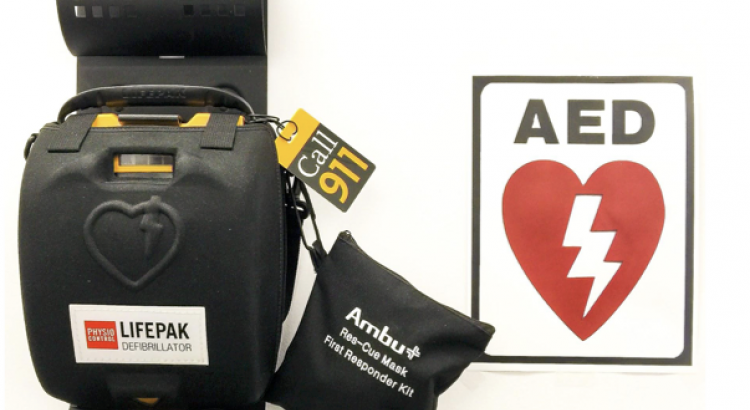
Picture of a LifePack AED

Why Should I Purchase An AED?

Each year, over 350,000 Americans die from Sudden Cardiac Arrest outside of a hospital. Cardiac arrest is a condition in which someone’s heart suddenly stops beating effectively. Unless quickly treated, a person who suffers cardiac arrest will die. According to the American Heart Association, the key to surviving cardiac arrest is early CPR and rapid use of an “Automated External Defibrillator” or AED.

Why do people suffer cardiac arrest?

Common causes include:

drowning,

heart attack

choking

electrocution

drug overdose

excessive physical activity and contact sports

People of all ages are at-risk.

How can I treat Cardiac Arrest?

The most effective treatment for cardiac arrest is early CPR and a shock from an AED called “defibrillation.” CPR keeps blood flowing to prevent brain death, while the shock from an AED can reset the heart allowing it to return to a normal rhythm.

CALLING 911 IS NOT ENOUGH

Picture of a LifePack AED

Ambulances can take a long time to arrive. In NYC, the average response time to life-threatening emergencies is over 9 minutes.
For each passing
minute without CPR and AED, a person’s chance of survival decreases 7-10%.

AEDs are SAFE

  • An AED will not deliver a shock to someone who doesn’t need it.
  • An advanced computer analyzes the victim’s heart rhythm to determine if a shock is required.

AEDs are EASY

  • AED’s are designed for people without medical training.
  • Simply turn it on and a clear voice will walk you through the process, step-by-step.

AEDs are EFFECTIVE

If you put an AED on a patient within the first few minutes of a sudden collapse, their chance of survival could be higher than 80%.

Although cardiopulmonary resuscitation (CPR) is a vital step in the lifesaving process and can keep blood flowing to the heart and brain for a short time, the shock from an AED is usually needed to save a life.

Frontline Health can provide quotes and guidance for purchasing an AED. For more information, please contact our team.

Empower yourself with real knowledge on how to use an AED and perform CPR – Take a CPR certification class Today!